

Thursday, June 20, 2013

Wednesday, June 19, 2013

Wednesday, June 12, 2013
5 ways green tea is good for your oral health
5 ways green tea is good for your oral health
Could this popular hot drink actually be good for your mouth? Here are five ways green tea may benefit your oral health
By Lisa Bendall
Green tea may well be a treat for your taste buds. But new research is suggesting that it benefits the rest of your oral cavity as well. Green tea contains compounds that appear to control inflammation and fight bacterial infection. This drink is also rich in antioxidants, which have many health properties.
What does that mean for your mouth? Here are five reasons why green tea may be good for your oral health.
1. Cavity prevention
Because green tea controls bacteria and lowers the acidity of saliva and dental plaque, it may be a useful tool in preventing cavities. A recent Egypt-based study tested people before and after they gave their mouths a five-minute rinse with green tea. The test subjects had less bacteria and acid in their mouths, as well as reduced gum bleeding. Other research has found that drinking green tea shows promise when it comes to preventing tooth decay.
2. Gum health
Green tea’s anti-inflammatory powers seem to help control periodontal (gum) disease. A Japanese survey of almost 1,000 men found that those who drank green tea regularly had healthier gums than those who didn’t. A German study found similar positive results in people who were asked to chew candies containing green-tea extracts.
3. Less tooth loss
It makes sense that a substance that helps prevent cavities and gum disease will help you keep your teeth. But in case you need proof, here it is: Japanese research published in 2010 reported that men and women who drink one or more cups of green tea a day were more likely to hold on to their natural teeth.
4. Cancer control
Related Features
The antioxidants and other properties of green tea appear to protect against cellular damage and cancerous tumour growth. In one study at the University of Texas, green-tea extract was given to patients with precancerous lesions in their mouths, and it slowed the progression to oral cancer. Animal studies have also found that tea compounds can inhibit cancer growth.5. Better breath
Green tea has been associated with better-smelling breath. Why? Likely because it kills the microbes that make our mouths stinky. The University of British Columbia’s Faculty of Dentistry measured the level of smelly compounds in people’s mouths after they were given green-tea powder or another substance that supposedly helps with bad breath. Green tea outperformed mints, chewing gum and even parsley-seed oil in this study.
Tips for drinking green tea
Want your daily diet to include more greens – green tea, that is? It’s likely safe to consume up to five cups a day of the stuff. But to get the maximum health and flavour benefits, make sure you prep your tea properly. Prepare a ceramic teapot by warming it with hot water. For the tea, use fresh, cold water, filtered or from a spring, if possible, instead of the tap. After bringing the water to a boil, let it cool for three minutes. Then pour it over tea leaves or a teabag and let it steep, covered, for three more minutes.
Think your teeth are set because you’re already drinking black tea? Keep in mind that since black tea is more processed, it contains less antioxidants and beneficial plant chemical compounds than green tea. Black tea is also two to three times higher in caffeine, so it’s more likely to cause side effects such as nervousness and sleep disturbances. Caffeine can also interfere with some medications – ask your doctor or pharmacist.
If you’re not a tea drinker, try oral care products that contain green tea, such as toothpaste and mouthwash (look for these at natural health stores). You can even chew gum or suck on candies made with green tea (as long as they’re sugarless!). But if you do enjoy tea, it makes sense to reach for green the next time you’re turning on the kettle.
Tuesday, August 14, 2012
Invisalign
What is Invisalign?
Invisalign is an invisible yet effective way to straighten teeth without braces. Every proficient Invisalign dentist in NYC uses a series of clear, removable aligners to gradually straighten teeth, without using metal or wires.
How does Invisalign work?
Invisalign uses 3-D computer imaging technology to depict the complete treatment plan from the initial position to the final desired position from which a series of custom-made, clear "aligners" are produced. Each "aligner" moves teeth incrementally and is worn for about two weeks, then is replaced by the next in the series until the final position is achieved. Thanks to the efficacy promised; more number of people can now be found looking for Invisalign in NYC.
What are the primary benefits of Invisalign?
- Invisalign is clear. You can straighten your teeth without anyone knowing.
- Invisalign is removable. Unlike braces, you can eat and drink what you want during treatment. You can also brush and floss normally to maintain good oral hygiene.
- Invisalign is comfortable. There are no metal brackets or wires as with braces to cause mouth irritation, and no metal or wires means you spend less time in the doctor's chair getting adjustments.
- Invisalign allows you to view your own virtual treatment plan before you start so you can see how your straight teeth will look when your treatment is complete.
What are aligners made of?
Aligners are made of clear, strong medical grade plastic that is virtually invisible when worn.
What do aligners look like?
Aligners are clear and look similar to tooth-whitening trays, but are custom-made for a better fit to move teeth. Some orthodontists and Invisalign dentist NYC have referred to them as "contact lenses for teeth."
Is this a new way to straighten teeth?
For years, orthodontists and dentists have used removable appliances for limited treatment. Today, with the application of computer technology and custom manufacturing, Invisalign treats a broader range of cases with greater precision.
How old is the company?
Align Technology, Inc., the company that manufactures Invisalign, was founded in 1997. Since then, Align has manufactured over 10 million aligners and 250,000 patients have received treatment.
How old is this technology?
In 1945, Dr. H.D. Kesling envisioned that one day modern technology would enable the use of a series of tooth positioners to produce the kinds of movements required for comprehensive orthodontic treatment. Technology has made this vision a reality. Using advanced computer technology, Align crafted Invisalign®, a series of customized clear appliances called "aligners." Each aligner is worn sequentially by the patient to produce extensive tooth movements in both upper and lower arches..
How many patients are being treated with Invisalign?
Worldwide, almost 250,000 patients have been treated with Invisalign. The number grows with the each passing day
Do doctors need special training in order to use Invisalign?
While Invisalign can be used with virtually any treatment philosophy, specific training is needed. All orthodontists and dentists interested in treating patients with Invisalign must attend training before cases will be accepted from their office. Close to 30,000 orthodontists and dentists worldwide are certified to use Invisalign.
How does Invisalign effectively move teeth?
Like brackets and arch wires are to braces, Invisalign aligners move teeth through appropriate placement of controlled force on the teeth. The principal difference is that Invisalign not only controls forces, but also controls the timing of the force application. At each stage, only certain teeth are allowed to move, and these movements are determined by the orthodontic treatment plan for that particular stage. This results in an efficient force delivery system.
Has the FDA cleared Invisalign?
Yes, the FDA has reviewed our application and in August 1998 determined that Invisalign is exempt from 510(k) pre-market notification.
What is Invisalign Express?
Invisalign Express is an orthodontic treatment designed to correct mild orthodontic problems such as minor crowding and spacing. Since it's designed for mild problems only, treatment time is generally less than six months. If you are looking for Invisalign in NYC, ask your certified doctor for more information on this new treatment, or give us a call.
Tuesday, May 31, 2011
Electric Brushes versus Manual Brushes
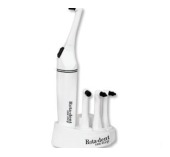 There have been multiple studies comparing the effectiveness of manual brushes as opposed to electric brushes.
Although not all electric brushes are the same, these studies conclude that in general electric brushes are more efficient in controlling plaque than manual brushes. Theoretically, you can do a very good brushing with a regular hand brush, but the movements of an electric brush make the task easier and more effective.
Also, some electric brushes (Sonicare) produce sonic vibrations that are difficult to mimic with a hand brush! Other electric brushes like Oral-B and Rotadent have small heads that help you access hard-to-reach areas of your mouth. This aspect is more important when you are talking about someone with orthodontic braces or a history of gum disease.
If you have any questions about electric brushes and you live in New York or surrounding area, give us a call today at (212) 905-0081!
Subscribe to:
Posts (Atom)